
A full ecommerce build — live Stripe payments, a bespoke admin, and AI in the slow jobs
- Client
- amalia
- Timeline
- 10 days to first live payment
- Location
- Remote · en-GB, prices in GBP
- Industry
- Homeware & Pet Ecommerce
The challenge
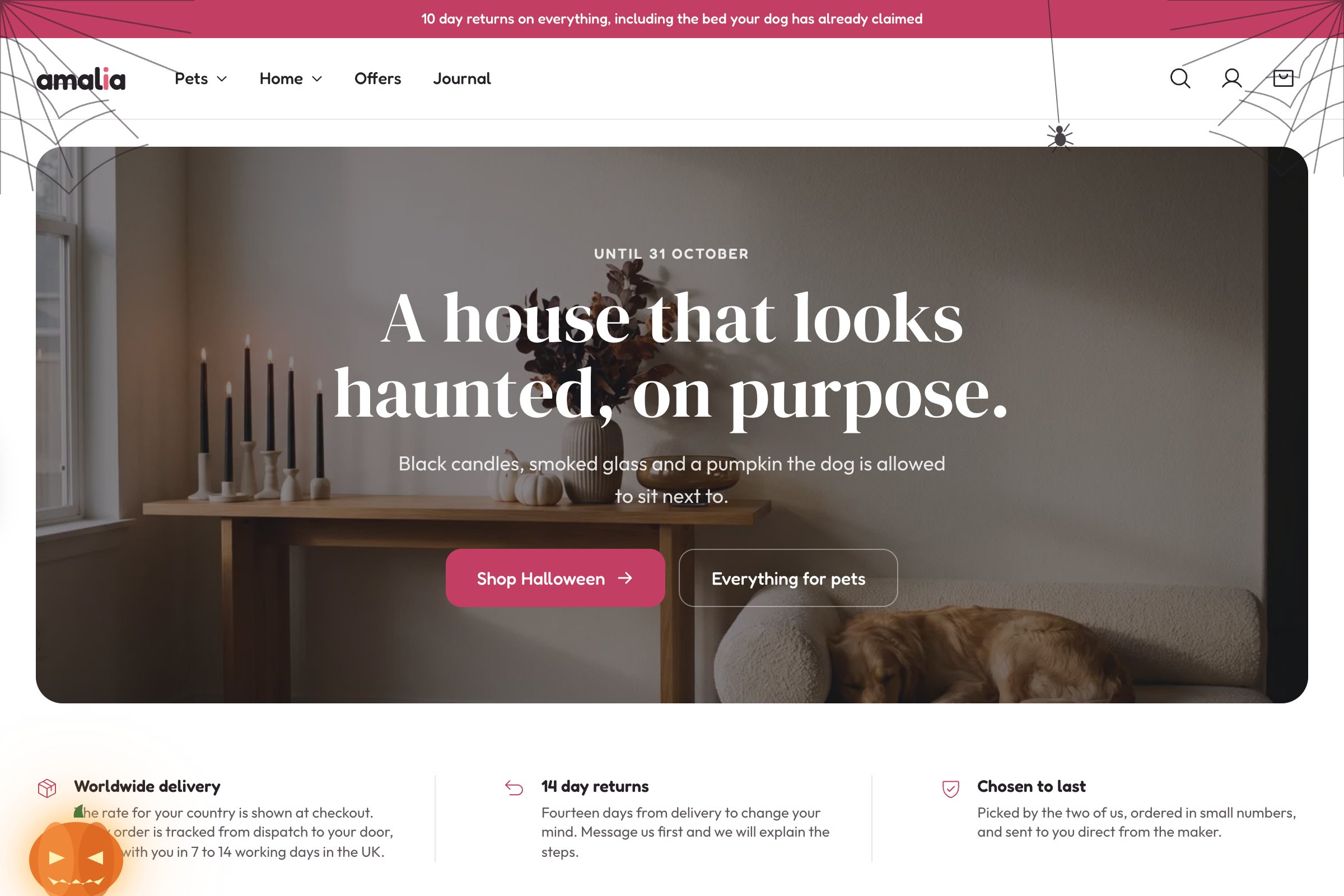
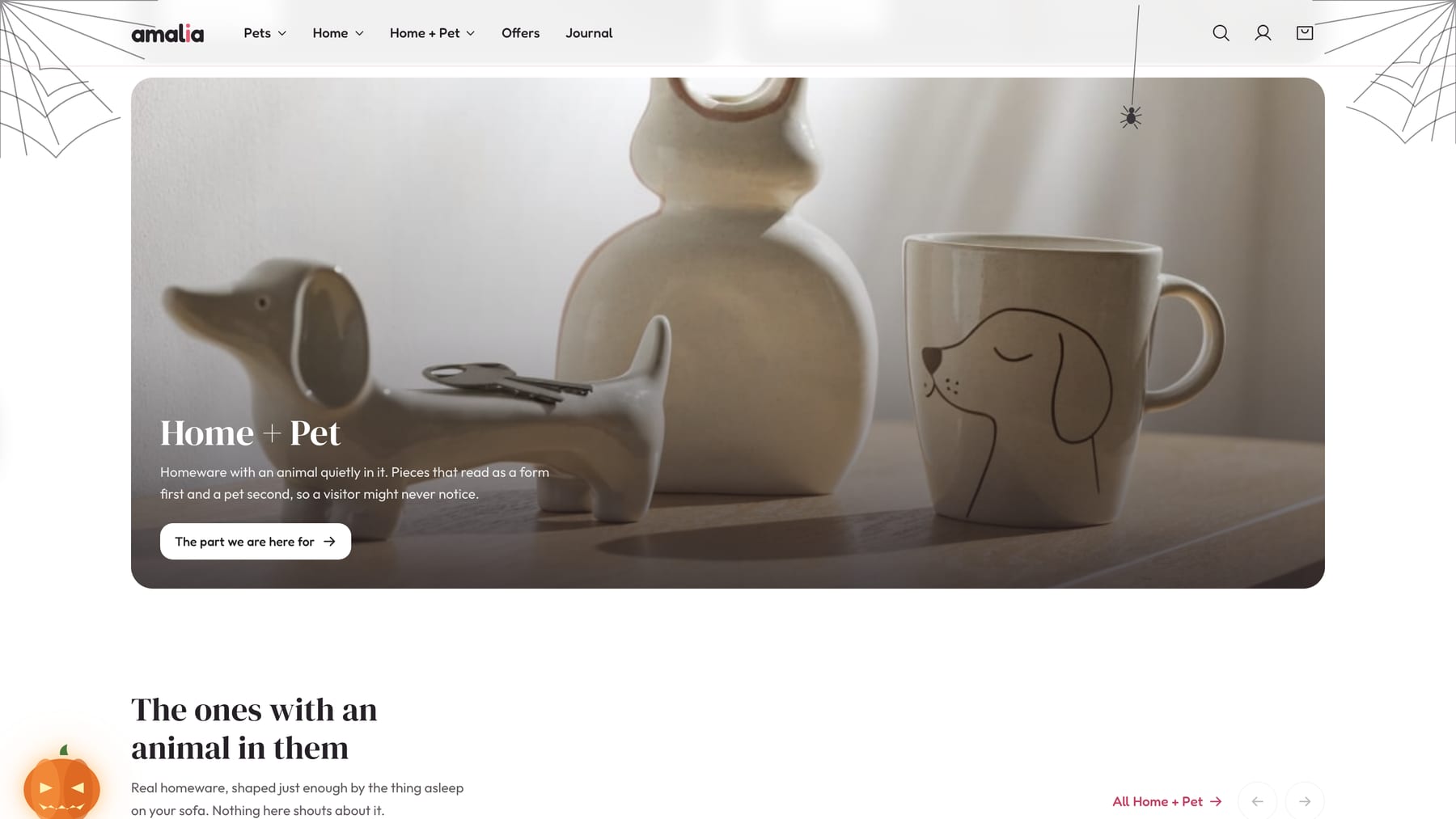
amalia (trading as amalyashop) sells design-led homeware and pet goods, plus a third pillar the shop is genuinely built around — Home + Pet, homeware with an animal quietly in it. A hosted shop platform would have handled the checkout and then charged monthly rent on it, while still making the interesting parts impossible: a seasonal storefront that changes for Halloween without a developer, a product page that reads like the brand rather than a template, and an owner who can run the whole catalogue herself.
The build had to take real money safely, be editable end to end by someone non-technical, and never lose an order.
Our solution
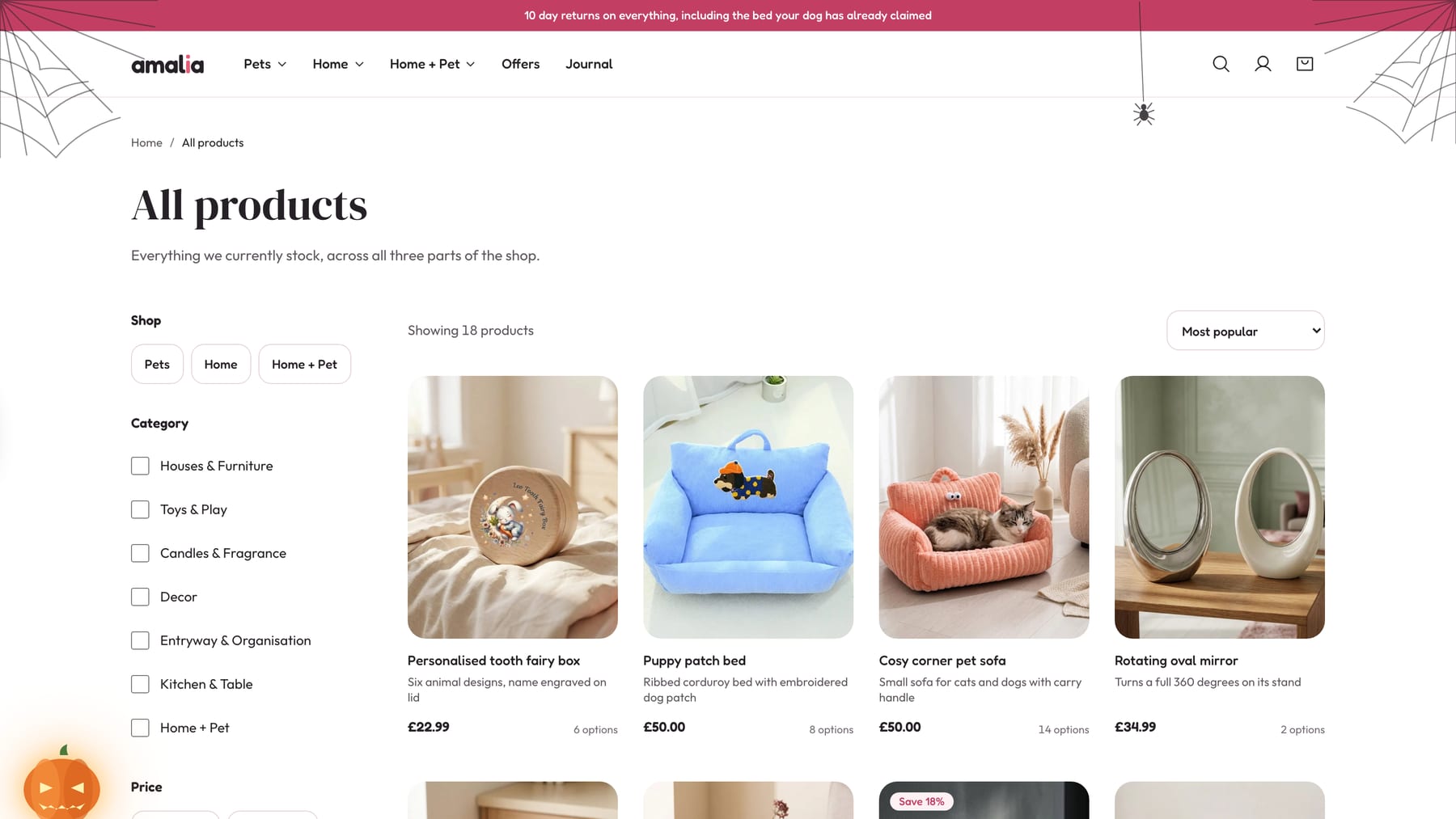
We designed and built the shop and its admin panel end to end on Next.js 16 (App Router, React Server Components, Server Actions) with Supabase for Postgres and auth. Money was the part we were strictest about: prices are stored everywhere as integer pence, the basket cookie carries product and variant ids only, and every line price, discount and delivery charge is re-derived on the server — a tampered cookie can change what you are buying, never what it costs.
Cards go through the Stripe Payment Element, so they are entered in Stripe's own iframe and never touch our application, which is what keeps the shop out of PCI scope. Three separate things can settle an order — the browser, the webhook, and the confirmation page reconciling on render — and a compare-and-set in Postgres decides which one actually moved the row, so a closed tab or a dropped webhook cannot lose a payment and a customer is never sent two receipts.
Row-level security is on across all sixteen tables, and admin access is a database row the application itself can never write. The admin panel is the other half of the project: orders with courier tracking, products, customers, discounts, per-product delivery rates, editable site content, a journal, a mailbox that receives real customer email in-app, and seasonal campaigns that schedule themselves — the Halloween storefront above expires on 31 October on its own.
AI sits only where it saves the owner time: a Claude-powered writing assistant for short-form copy, a product assistant that asks one question at a time and hands back a filled-in draft, and hero photography that can be generated and re-edited in words, so a campaign does not wait on a photoshoot. Every assistant returns a draft into a field the owner keeps or discards — nothing it produces saves itself.

I wanted a shop of my own, not one I rented by the month. Verosite built the whole thing — the storefront, the checkout, the admin — and we took our first real card payment ten days after they started. What I did not expect was how much of it I would run myself: I add the products, set the prices, write the journal, and put the shop into a season and back out again without asking anyone.
Liuda, Co-founder, amalia

Contact · reply within 24 hours
Ready to takeyour businessonline properly?
Book a 20-minute consultation. We'll audit your current site, identify your three biggest missed opportunities, and show you exactly what we'd build. No pitch deck. No obligation.
Or email info@verosite.co.uk directly